2026 NWAFU International Youth Exchange Program
发布日期:2026-03-18 浏览次数:
2026 NWAFU International Youth Exchange Program
May 18-May 31, 2026
A thousand years of farming,
a glimpse of Yang Ling.
Learn about Yangling and China,
and
meet new friends!
About Our Program
Welcome to the 2026 NWAFU International Youth Exchnge Program. This program is designed to provide a rare opportunity for overseas students to experience the pulse of China’s agricultural development as observers and participants.
In this course, you will learn about the current agricultural and environment science in China. In addition to being guided by experienced professors, you will visit the State Key Laboratory of Crop Adversity Biology in Dry Areas, the Terracotta Warriors and Horses of Qin Shi Huang’s Mausoleum, and the Xi’an Museum. In this way, we will help students better appreciate the charm of agricultural development and better perceive the Chinese culture.
Highly Qualified and Specialized Faculty
This program brings together outstanding educators from China, the United States, Malaysia, Ghana, Kenya, and Nigeria. The Chinese faculty comprises senior professors and young key teachers in environmental science, many of whom have extensive experience studying abroad or visiting international institutions, bringing with them strong academic backgrounds and a global perspective. The international faculty consists of renowned professors in environmental science, ecology, and environmental engineering, with substantial overseas teaching experience. Both groups of faculty members are committed to integrating cutting-edge international educational concepts and research methodologies into the curriculum. Additionally, the program regularly invites distinguished scholars from leading research institutions to deliver special lectures and host academic seminars.
In-depth Integration of Theory and Practice
The curriculum skillfully combines theoretical lectures with practical field trips, so that students can learn the basic theories of environmental science and at the same time gain a deeper understanding of the practical applications of environmental science through field trips and practical projects. For example, students will have the opportunity to participate in the research base program of Northwest A&F University to experience the process of environmental monitoring and pollution control. This close integration of theory and practice greatly enhances students’ understanding and application of knowledge.
Other activities
Day tours can be added according to the students’ needs to explore various parts of Shaanxi Province such as the Terracotta Warriors, Xi’an Museum, Bell Tower, Drum Tower and Dayan Pagoda and surrounding cities and sites to learn the history of Shaanxi Province while experiencing its history and cultural charm.
Certificate
On completion of NWAFU Summer school, you will be awarded a Summer School Certificate from NWAFU, which prove that you have good understanding of Chinese rural development and Chinese culture.
Program Agenda
(May 18-May 31)
| Date | Day | Time | Arrangement |
| 18-May | Day 1 (Mon.) | AM | Opening Ceremony |
| PM | Visit South Campus (Museum Garden, NWAFU) | ||
| Welcome Banquet | |||
| 19-May | Day 2 (Tue.) | AM | Visit North Campus |
| PM | Seminar: Agricultural Extension and Practice in NWAFU (Africa, SCO) | ||
| 20-May | Day 3 (Wed.) | AM | Lecture: Chinese Traditional Culture (Period 1-2) |
| PM | Visit State Key Laboratory of Crop Stress Biology for Arid Areas, NWAFU | ||
| 21-May | Day 4 (Thu.) | AM | Lecture: The Origin of Agricultural Civilization (Period 1-2) |
| PM | Visit Yangling Smart Agricultural Demonstration Park | ||
| 22-May | Day 5 (Fri.) | AM | Lecture: Chinese Calligraphy Introduction (Period 1-2) |
| PM | Agritourism Experience: Cherry Orchard Picking | ||
| 23-May | Day 6 (Sat.) | Whole Day | Visit the Terra-cotta Warriors and Horses |
| 24-May | Day 7 (Sun.) | AM | Seminar: Rethinking Environmental Protection: Science, Policy, and Society |
| PM | Music Festival+Ice-breaking Games | ||
| 25-May | Day 8 (Mon.) | Whole Day | Chat & Chill & Wine Tasting(Chateau Changyu Rena) |
| 26-May | Day 9 (Tue.) | AM | NWAFU:Chinese Language Course 1 (Period 1-2) |
| PM | Seminar: Ecological Protection and High-quality Development of the Yellow River Basin | ||
| 27-May | Day 10 (Wed.) | AM | NWAFU:Chinese Language Course 2 (Period 1-2) |
| PM | Visit Zhouzhi Water Street | ||
| 28-May | Day 11 (Thu.) | Whole Day | Xi’an Qinling Wildlife Park+Show: Everlasting Regret |
| 29-May | Day 12 (Fri.) | Whole Day | Visit the Xi'an Ancient City Wall, Bell Tower, Drum Tower and Dayan Pagoda、Ci En Temple、Da Tang Everbright City |
| 30-May | Day 13 (Sat.) | AM | Xi’an Museum |
| PM | Traditional Cultural Heritage Immersion | ||
| 31-May | Day 14 (Sun.) | AM | Closing Ceremony, Group Discussion & Summary Sharing |
| PM | Departure |
Faculty Introduction
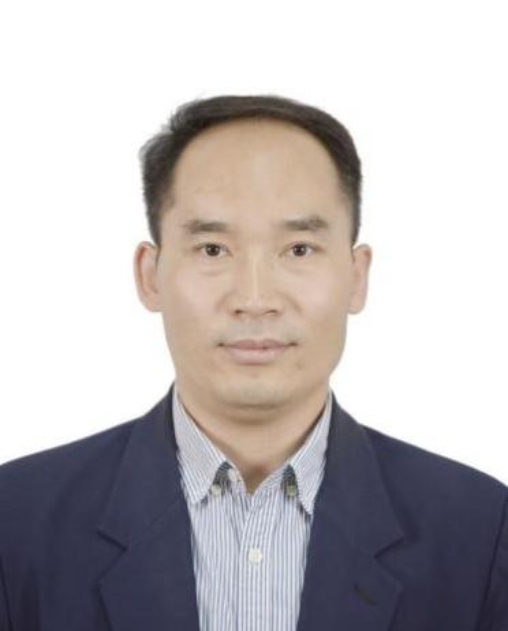
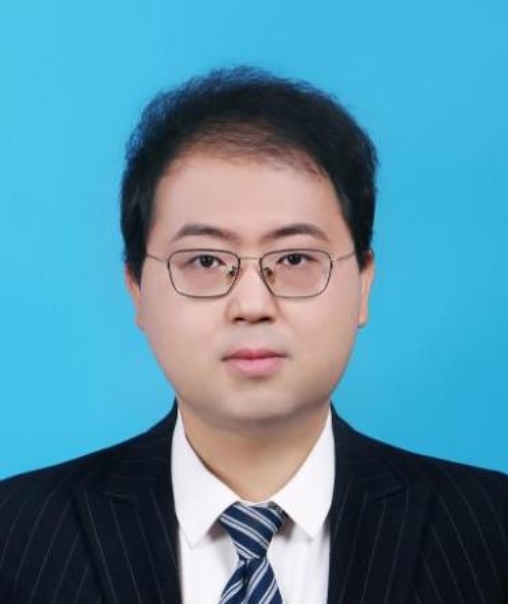
Li Zhi, Professor
College of Natural Resources and Environment, Northwest A&F University
RESEARCH INTERESTS
My research interests focus on assessing and regulating the impacts of environmental changes on hydrology. The first research area is related to the sustainability of subsurface water under changing environment. To understand the changes in subsurface water and the controlling factors, tracer method such as isotope and chloride is used to interpret the recharge mechanism and quantify the recharge rates. Further, combined with modeling work by HYDRUS-1D, the impacts of climate and land use change on subsurface water are quantified to give information for water resources management.
The second aspect is to quantify/project the effects of the past/future climate change on surface water and soil erosion both on hill slope and watershed scale. Modeling methods have been used, such as hydrological models (SWAT and WEPP), weather generators, and climate models (GCMs and RCMs). My main work is to solve the mismatch between the course resolution of GCM outputs (grid and monthly scale) and the high-resolution input requirement of hydrological models (station and daily scale). I am trying to develop some techniques for GCM downscaling.
Zhang Jie, Associate Professor
College of Language and Culture of Northwest A&F University
RESEARCH INTERESTS
International Chinese education, Chinese ontology teaching, second language acquisition, Chinese culture dissemination, etc.
MAIN COURSE
Modern Chinese, Comprehensive Chinese, China Overview, Chinese listening and so on.
WORK EXPERIENCE
July 2013 to December 2015 Assistant Professor, he taught at the College of International Education, Northwest A&F University.
From January 2016 to December 2018, he was a lecturer at the College of International Education of Northwest A&F University.
Since January 2019, he has been an associate Professor in the School of International Studies and the College of Language and Culture of Northwest A&F University.

Wang Jueqing, Lecture
College of Language and Culture of Northwest A&F University
RESEARCH INTERESTS
Her research focuses on the teaching of Chinese as a second language, including teaching Chinese as a foreign language and nationalized Chinese textbooks.
MAIN COURSE
Methods of Teaching Chinese as a Foreign Language, Comprehensive Chinese, Chinese Listening etc.
WORK EXPERIENCE
From February 2013 to February 2014, she went to Jeonju High School in North Jeolla Province, South Korea to teach Chinese.
From July 2015 to June 2019, she taught at the College of International Education.
From July 2019 to now, she has been teaching in the College of Language and Culture of Northwest A&F University.

Wang Min, Lecture
College of Language and Culture of Northwest A&F University
RESEARCH INTERESTS
Second Language acquisition, teaching Chinese as a foreign language, Chinese culture, etc.
MAIN COURSE
Introduction to Teaching Chinese as Foreign Language, elementary spoken Chinese, Chinese culture, HSK tutoring, etc.
AWARDS
In 2015, she won the second prize of school-level teaching achievements.
WORK EXPERIENCE
From June 2019 to now College of Language and Culture, Northwest A&F University.
From May 2013 to June 2019 she taught at the College of International Education, Northwest A&F University.
From 2010 to 2011 she went to Confucius Institute, Atanyao University, Philippines.

Charles Kenneth Smith, Professor
College of Natural Resources and Environment, Northwest A&F University
ADMINISTRATIVE EXPERIENCE
Global Professor and Micro-campus Director, University of Arizona, Department of Environmental Sciences, 2021 to 2025.
Responsible for coordinating the new UA microcampus at the Northwest Agriculture and Forestry University in Yangling, China.
Specific duties include teaching environmental science courses to Chinese students enrolled in the dual UA/NWAFU degree program, hiring additional faculty to teach in the program, mentoring younger faculty working in China, finding ways to promote joint research efforts between the two universities, and coordinating activities in China with UA’s Department of Environmental Sciences and Global Programs as well as with our Chinese colleagues at NWAFU.
TEACHING EXPERIENCE
Professor of Practice and Microcampus Director, Department of Environmental Science, University of Arizona dual degree program, Northwest Agriculture and Forestry University, Yangling, China.
Currently teach ENVS 210 (Fundamentals of Environmental Science), ENVS 200-201 (Soil Science), and Careers in Environmental Science (ENVS 195) to 85 students at NWAFU.
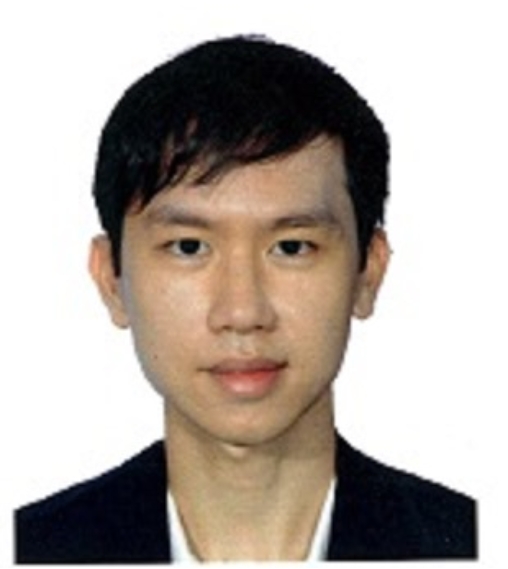
Daniel Tang Kuok Ho, Professor
College of Natural Resources and Environment, Northwest A&F University
QUALIFICATIONS
PhD (Safety Performance Evaluation Framework of Offshore Platforms) (University of Malaya, Malaysia) (2014-2018).
M. Sc. Environmental Engineering (University of Nottingham, UK) (2005 – 2006).
B. Sc. Chemistry and Biology (Campbell University, USA) (2003 – 2005).
TAE Cert IV in Training and Assessment (GippsTAFE, Australia) (2013).
Advanced Diploma of Ministry (Christian Leaders Institute, USA) (2014).
MEMBERSHIP OF PROFESSIONAL BODIES
CEng & Chartered Energy Engineer, Energy Institute (EI), Membership Number: 0062798.
Chartered Environmentalist, Energy Institute (EI), Registration Number: 10193.
EIA Consultant, Department of Environment Malaysia, Registration Number: C0576.
EIA Consultant (Field: Environmental Engineering, Environmental Management), Natural Resources and Environment Board, Registration Number: NREB/I/00806.
INDUSTRIAL APPOINTMENT:
Environmental consultant (2007-2015) Team leader/ project coordinator/ consultant of more than 60 environmental projects consisting of environmental impact assessments, environmental management plans, environmental monitoring and feasibility studies.
Appointed as environmental engineer of a renowned environmental consultancy in Malaysia.

Martha Noro Chollom, Professor
College of Natural Resources and Environment, Northwest A&F University
Dr Martha Noro Chollom is Postdoctoral Fellow with the Mangosuthu University of Technology (MUT) where she leads, the Environmental Pollution and Remediation Research Group. Her research interests lie in developing solutions aimed at attaining sustainable development goals: Clean Water and Sanitation (SDG 6) and Affordable and Clean Energy (SDG 7). She has over ten years teaching and research experience at university level. She possesses exceptional interpersonal skills, ability to work in a team and develop partnerships with potential stakeholders.
RESEARCH INTERESTS
Synthesis, characterization of novel adsorbents and catalysts for water and wastewater treatment and biogas purification Water and wastewater treatment (membrane technology, advanced oxidation processes, adsorption, nanotechnology, anaerobic digestion) Renewable Energy such as biomass and biofuels.
ADMINISTRATION & RESPONSIBILITIES
From 2023 to 2024: Member, local organising committee, FAMU & MUT, 2024 Energy Water Food Nexus International Summit, Durban South Africa.
From 2016 to 2020: Postgraduate representative, Department of Chemical, Durban University of technology.
Research seminar for the Green Engineering Research group at Durban University of Technology, South Africa on 14th October 2022. PROFESSIONAL SERVICE.
From 2022 to Present: Guest Editor, Membrane Journal, MDPI.
MEMBERSHIP IN PROFESSIONAL BODIES
Graduate Engineer, Engineering council of Southern Africa.
South African Institute of Chemical Engineers (SAIChE) & (IChemE).
Water Institute of Southern Africa (WISA).

Isaac Dennis Amoah, Professor
College of Natural Resources and Environment, Northwest A&F University
RESEARCH INTERESTS
My research interest spans a range of topics in environmental microbiology, primarily interested in health-related water microbiology specifically. microbial health risk assessment associated with exposure to polluted water and wastewater. Other research interest includes One-health approach to understanding the development and dissemination of antimicrobial resistance, the role of microplastics in the dissemination antibiotic resistance genes and pathogens in the environment.
ACADEMIC CONTRIBUTION
Journal Review Editor: Frontiers in Environmental Science (Wastewater Section).
Journal reviewers: 12 journals International Research Program Reviewer: Czech Science Foundation and the Confederation of Advanced Research Training in Africa (CARTA).
Professor Reviewer: Soleimani University - Kurdistan - Iraq.
Guest Editor (MDPI Special Issue): Emerging Pollutants and Wastewater Treatment Technologies.
ACHIEVEMENTS
South African National Research Foundation (2022) as Y-level researcher (promising young researcher).
2019 Willie Graber Young Investigator Award from the International Water Association.
Received the ‘Best Published Researcher’ award from Durban University of Technology in 2019 for outstanding performance in publishing papers as a postdoctoral fellow in 2018.
Received the ‘Best Published PhD Student’ award from Durban University of Technology in 2018.

Michael Anthony Pohlmann, Professor
College of Natural Resources and Environment, Northwest A&F University
RESEARCH INTERESTS
Critical Zone Science, soil and environmental chemistry, post-fire soil chemistry, fate of soil nutrients and carbon after disturbance.
RESEARCH EXPERIENCE
Designed and conducted independent research on fire effects on soil and water chemistry in the Jemez River Basin CZO, including method development for complex quantification and characterization of soil pyrogenic carbon using molecular markers (BPCA method), conducted complimentary soil aqueous extraction and chemical analysis on >400 soil samples, 2015-2020.
TEACHING EXPERIENCE
University of Arizona (UArizona) - Department of Environmental Science (ENVS) Instructor.
ENVS 430/530: Environmental Monitoring and Remediation and Lab, cross-listed undergrad
capstone/Grad course, course development: curriculum, syllabus, and lecture, Fall 2022.
ENVS 210: Introduction to Environmental Science, undergraduate core course (online),
course development: curriculum, syllabus, and lecture, Fall 2018 Teaching Assistant.
ENVS 210: Introduction to Environmental Science, undergraduate core course (online),
teaching team, student correspondence, for A. Haverland, Fall 2022.
ENVS 401/501: Sustainable Management of Arid Lands and Salt Affected Soils, cross-listed.
undergrad/Grad course, lecturer, lab instructor, unofficial audit, for J. Walworth, Fall 2017.

Cleophas Achisa Mecha, Professor
College of Natural Resources and Environment, Northwest A&F University
RESEARCH INTERESTS
Water and wastewater treatment technologies (membrane technology, advanced oxidation
processes, adsorption, nanotechnology).
Synthesis and application of novel materials for environmental remediation.
Renewable Energy: production, purification, and utilization of bioenergy.
Environmental impact assessment and environmental audi.
EMPLOYMENT
Senior Lecturer, Moi University, Department of Chemical and Process Engineering.
Lecturer, Moi University, Department of Chemical and Process Engineering.
Post Graduate Teaching Assistant, Tshwane University of Technology.
Postgraduate Teaching/Research Assistant, Durban University of Technology.
Graduate Assistant, Moi University, Department of Chemical and Process Engineering.
Chemical technologist, Moi Teaching and Referral Hospita.
AWARDS & SCHOLARSHIPS
Award for the second-best Doctoral presenter in the Faculty of Engineering and the Built Environment Research Day held on 16th September 2016 at Tshwane University of Technology.
Award for the best Doctoral presenter in the Faculty of Engineering and the Built Environment Research Day held on 2nd October 2015 at Tshwane University of Technology.
Award for the best Chemical Engineering presentation during the Technology Students Association Exhibition at Moi University.
National Research Foundation Doctoral grant 2015-2017.
Tshwane University of Technology Postgraduate Scholarship (PhD).
Durban University Postgraduate Scholarship (MSc).
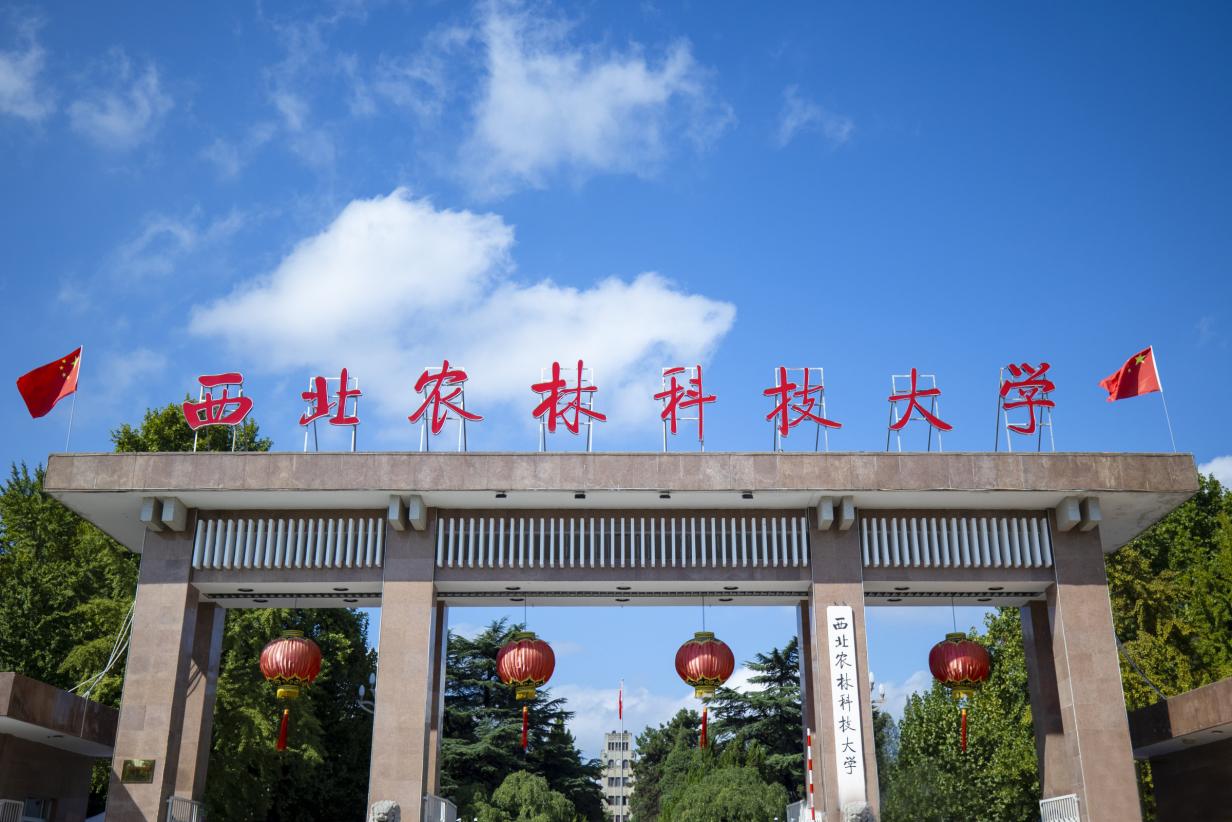
NWAFU Overview
Northwest A&F University (NWAFU) is a key national comprehensive university under the administration of the Ministry of Education. Supported by the Ministry of Education’s “Project 985” and “Project 211”, it is one of the universities listed in the National “World-Class University and First-class Discipline” Project. NWAFU is located in Yangling, Shaanxi Province, the birthplace of Chinese agricultural civilization and today’s National Agriculture High-tech Industrial Demonstration zone. Current Party Secretary is Huang Siguang, President Wu Pute.
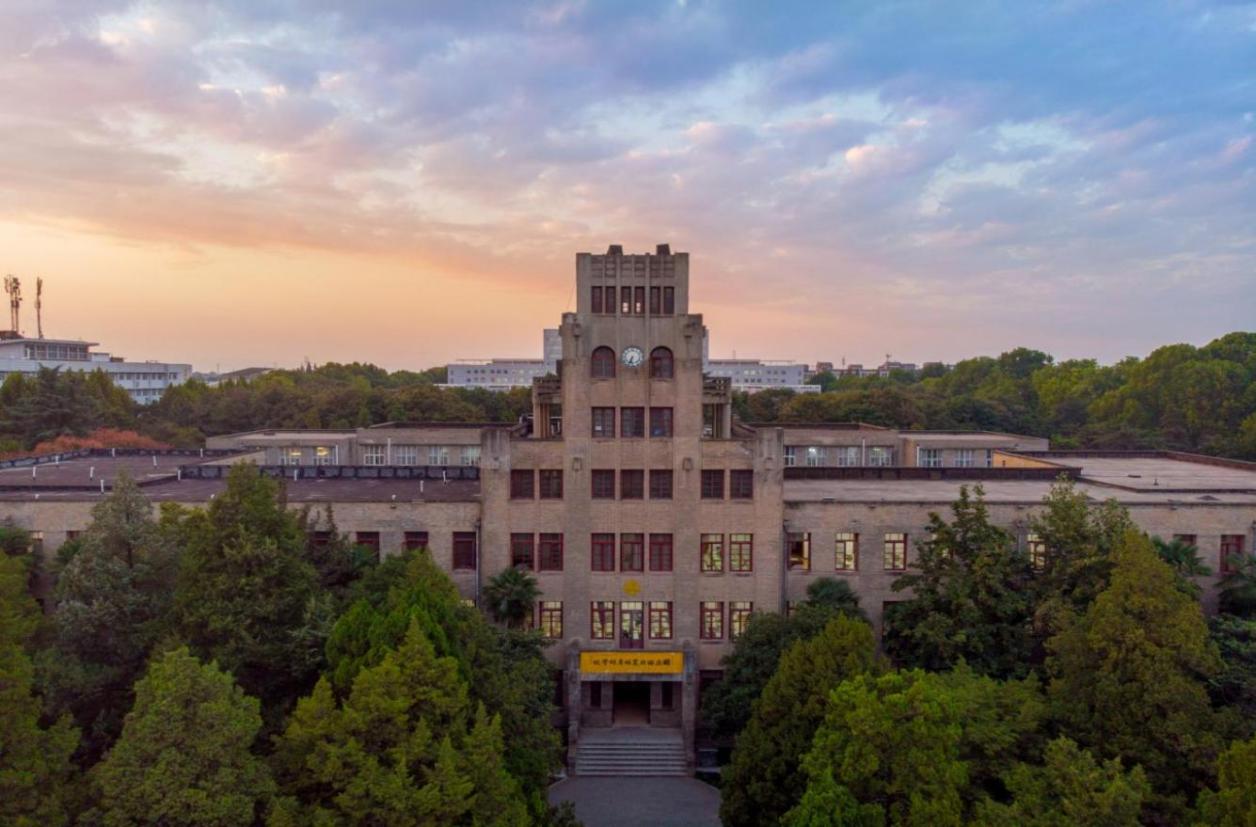
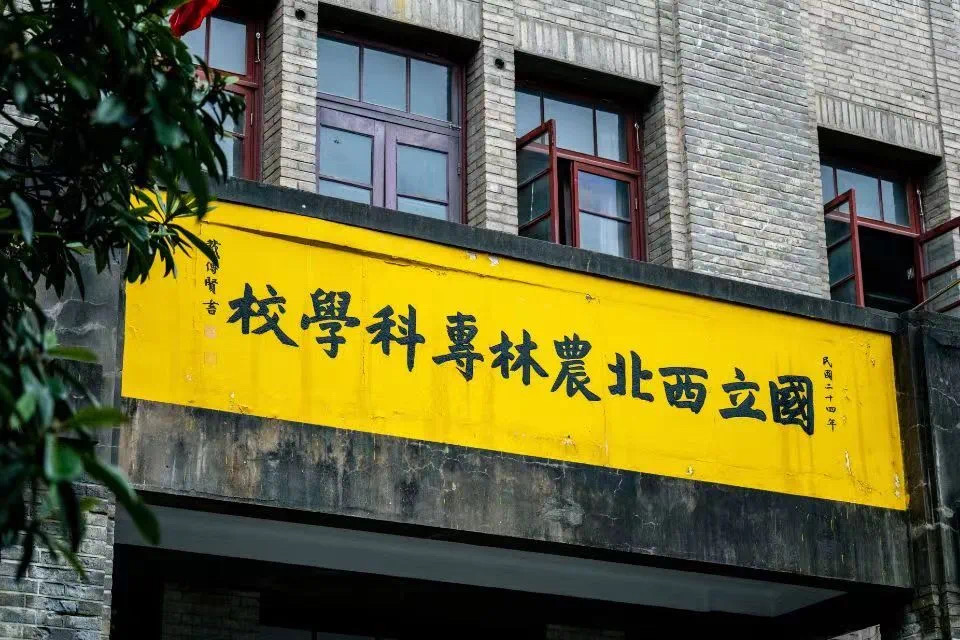
The University originated from National Northwest Junior College of Agriculture and Forestry founded in 1934, which was the earliest institution of higher agriculture and forestry education in northwest China. Since its establishment, NWAFU has been closely bound up with the fate of the country and the nation, assuming the responsibility of rejuvenating northwest China, boosting agricultural prosperity, and cultivating talents.
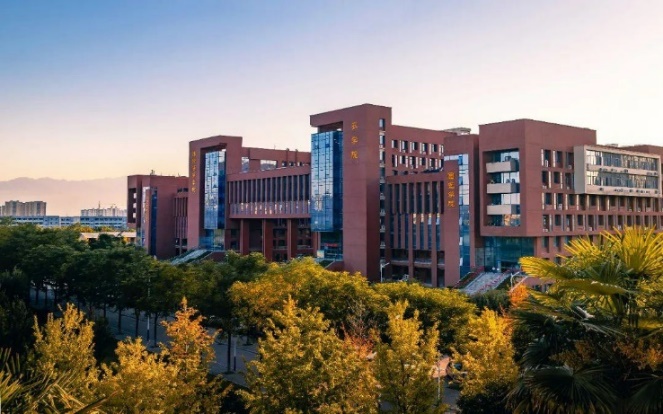
In September 1999, to implement the strategy of western development and promote the coordinated reform of the science and education system, the CPC Central Committee and the State Council made overall plans. Seven teaching and scientific research institutions merged, namely Northwest Agricultural University, Northwest Forestry College, Institute of Soil and Water Conservation, Northwest Institute of Water Resources Science, Shaanxi Academy of Agricultural Sciences, Shaanxi Provincial Academy of Forestry, and Northwest Institute of Botany, and became today’s Northwest A&F University, jointly constructed by the Ministry of Education and the Provincial Government. NWAFU has been entrusted a mission to support and lead the development of modern agriculture in arid and semi-arid areas.
The past ninety years since the university’s establishment have witnessed generations of its faculty and students staying committed to the philosophy of “managing state fundamentals, solving civilian livelihood, and respecting scientific research” and practicing the university motto of “Sincerity, Simplicity, Bravery and Perseverance”. Inheriting the ambition of Hou Ji from time immemorial and practicing “Farming Teaching” in modern way, NWAFU has formed the spirit of “taking root in Yangling, giving prime concern to the country, fully engaging in the solution of the Three Rural Issues, braving hardships and pursuing excellence” and the culture of “unity, truth-seeking, tenacity and self-confidence”. The university persists in close integration of production-learning-research, and have made significant contributions to China’s agricultural modernization and scientific research.

NWAFU has 27 colleges (departments, institutes) and postgraduate schools, 14 mobile post-doctoral stations, 16 first-level disciplines for Doctorate Degree Granting, 27 first-level disciplines for Master Degree Granting, 1 Doctorate Degree Granting category, 17 Professional Master Degree Granting category, and 74 undergraduate programs. The university boasts 7 state key disciplines and 2 national priority (cultivating) disciplines. Ten disciplines including Agricultural Science, Plant and Animal Science, Engineering, Environmental Science and Ecology, Chemistry, Biology and Bio-Chemistry, Pharmacology & Toxicology, Molecular Biology & Genetics, Microbiology, and Geoscience ranks in the top 1% ESI disciplines worldwide. Agricultural Science, Plant and Animal Science are among the global top 1%. At present, it has developed into an agricultural university with the most complete agricultural, forestry and aquatic disciplines in China.
NWAFU boasts 1 national Base for Life science and technology Talents training, 3 national talent cultivating model innovation experiment zone, 12 national characteristic majors, and 8 “Outstanding Agricultural and Forestry Talents Plan” major.
Agronomy major has passed agricultural specialty (Grade III)certification. Hydrology and water resources engineering, agricultural water conservancy engineering, water conservancy and hydropower engineering, food science and engineering specialty has passed the certification of engineering education specialty.
Since its founding, NWAFU has acquired more than 6,000 accumulated scientific achievements in various areas, among which over 1,800 are awarded. Outstanding research accomplishments include“Bima-1”, the most widely planted wheat variety in China, and “Xiaoyan-6”, the leading replacement distant hybrid wheat variety. The university researchers also developed the apple variety “Qinguan”, the most commonly planted apple variety in China. The direct economic benefit of promoting and commercializing these achievements values over 300 billion RMB. Since the merger of seven institutes in 1999, firmly bearing in mind the national mission of serving for sustainable development in the arid areas, NWAFU has stood on the front-line of the Western Development, the Belt and Road Initiative, and the Rural Revitalization Strategy. The university has won 44 State Science and Technology Awards, led 91 research projects which achieved first prizes at the provincial and ministerial level, and obtained 1,667 national authorized invention patents.
A series of key technologies for high-quality, efficient, and green production of apples on the Loess Plateau has supported and led Loess Plateau to become world recognized and largest high-quality apple production base in China. The soil erosion control technology system has solved the global conundrum of ecological environment construction on the Loess Plateau, and helped push Shaanxi’s green territory 400 kilometers to the north and played an important role in the national project of returning farmland to forest (grassland).
NWAFU has formed its fine tradition of being close to “agriculture, rural areas, and farmers” and serving society in its long-term university-running practice. Since its founding, to meet the development need of national and regional leading industries, NWAFU has given full play to its social service function and striven for the demonstration, promotion, and industrialization of scientific and technological achievements.
NWAFU took the lead in exploring and practicing university-based new mode of agricultural science and technology promotion in China. Currently, the university has established scientific and technological cooperation with more than 500 local governments and leading enterprises,built28 agricultural science and technology experiment demonstration stations and 46 demonstration bases in the center of regional leading industries, and constructed fast channel for university agricultural science and technology achievements popularization among rural areas. The accumulated direct economic benefits of these achievements value over 80 billion yuan.
Adhering to running school openly, NWAFU has actively expanded international cooperation and exchanges in science, technology and education by strengthening substantive cooperation with world-class universities and academic institutions, thus forming a new pattern of all-round, multi-level and multi-channel international cooperation and exchanges. It has successively established intercollegiate partnerships with more than 152 well-known universities or scientific research institutions in 35 countries around the world, and an annual average of 1000 overseas scholars come to the university for academic exchanges. It has jointly carried out two Chinese-Foreign cooperative programs in food science and engineering and environmental science with Lincoln University in Nebraska and the University of Arizona. The university is qualified to receive Chinese government scholarships for international students, with 318 international students currently.
Internationaization has transformed NWAFU from “outside promotes inside” to “going outside to act”. Through actively participating in the Belt and Road Initiative, it has gradually become a highland for China to carry out international agricultural exchanges and cooperation and serve the construction of the Silk Road Economic Belt. The Silk-road Agricultural Education and Research Innovation Alliance led predominately by NWAFU has a profound influence. NWAFU takes the lead in establishing 8 agricultural science and technology demonstration parks and 3 overseas talent training bases in countries along the silk road.
NWAFU and Yangling Demonstration Zone jointly built the Shanghai Cooperation Organization (SCO) agricultural technology exchange and training demonstration base. It lead the establishment of the SCO Institute of Modern Agricultural Development and the SCO International Joint Laboratory, and became a member of the Agricultural Colleges and Universities Alliance of SCO Member States(leading modern agriculture).It was approved to build Confucius Classroom at Baranovichi State University in Belarus.
In the new era, NWAFU will fully implement the Party’s education policy, take the spirit of the “letter of reply” from General Secretary Xi Jinping to the secretaries and presidents of national agriculture-related universities and expert representatives as a guide, and fulfill the fundamental task of “strengthening moral education and cultivate people”. Adhering to the principle of “making groundbreaking innovations and transforming them into productive forces”, the university will continue to implement the three strategies of strengthening university by talents, internationalization and informatization. It will actively undertake the four missions of safeguarding national food security, maintaining ecological civilization, promoting human health and serving rural revitalization, and strive to achieve five benchmarks of cultivating outstanding agricultural and forestry talents, leading future agricultural development in arid and semi-arid regions, boosting rural revitalization, promoting one construction and deepening university and local integration, to fulfill its historical responsibility of strengthening agriculture and promoting agricultural development, accelerate the construction of world-class agricultural university with Chinese characteristics and strive to realize the dream of great rejuvenation of the Chinese nation.
Scenic Spots Introduction
State Key Laboratory of Crop Stress Biology for Arid Areas, NWAFU
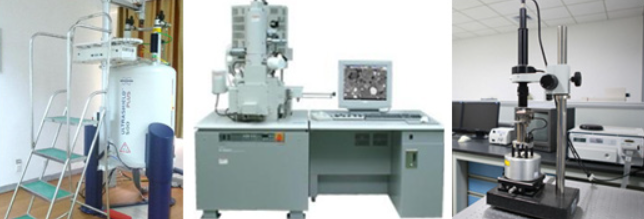
The State Key Laboratory of Crop Stress Biology for Arid Areas was developed from the Shaanxi Province Key Laboratory of Molecular Biology for Agriculture that was established on 28th June,2001. The laboratory entered the sequential development of the State Key Laboratory Bases supported by both the Ministry of Science and Technology and Shaanxi Province in 2005 and successfully passed the inspections in 2006. In October, 2011, the State Key Laboratory of Crop Stress Biology for Arid Areaswas approved to establish. Kang Zhensheng, a “Changjiang” Scholar Chair Professor, is the laboratory director and Prof. Shan Lun, an academician of the Chinese Academy of Sciences, is the director of the academic committee.
Museum Garden, NWAFU
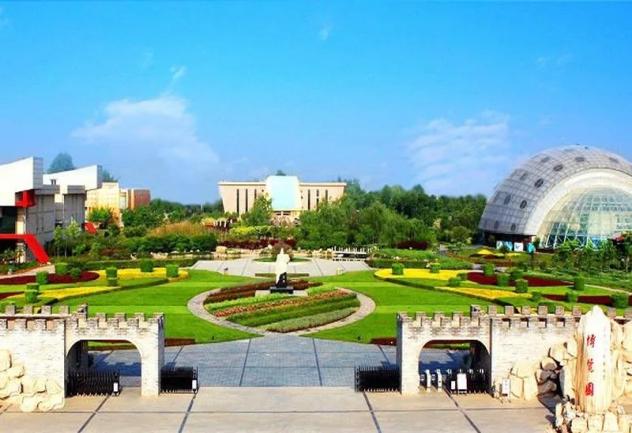
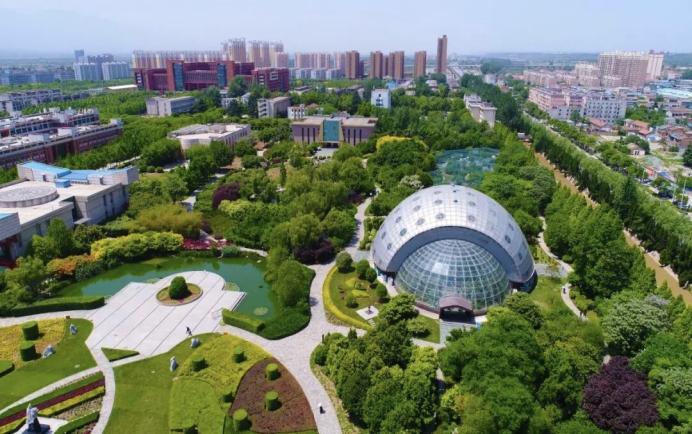
Agricultural Hi-tech Industries, the Museum Garden has a total building area of more than 16000 square meters and consists of five museums oriented for entomology, zoology, soils and plants and agricultural history of China,a butterfly garden,and nuserying beds for plant germplasm,so that it is now the largest theme museum group ever established in China. It collects more than 1.2 million specimens of insects, more than 8000 specimens of animals,0.55 milion specimens of plants, more than 2000 specimens of soils, more than 2000 agricultural history related relics and farming tools, more than 5000 ancient thread-bound books, and more than 600 species of trees, which is a collection that ranks first among all the universities and colleges of China.
Xi’an Qinling Wildlife Park
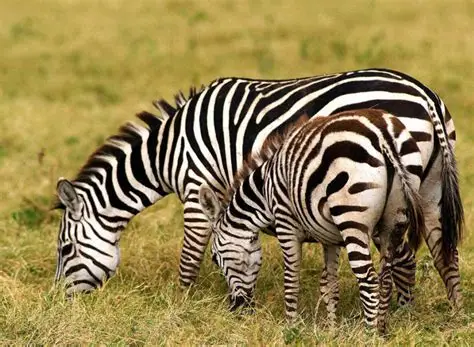
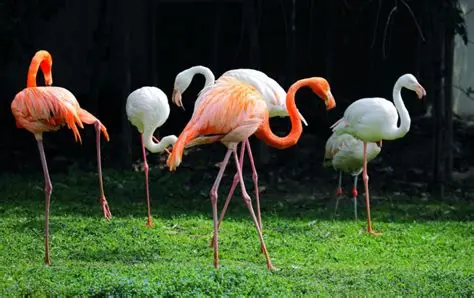
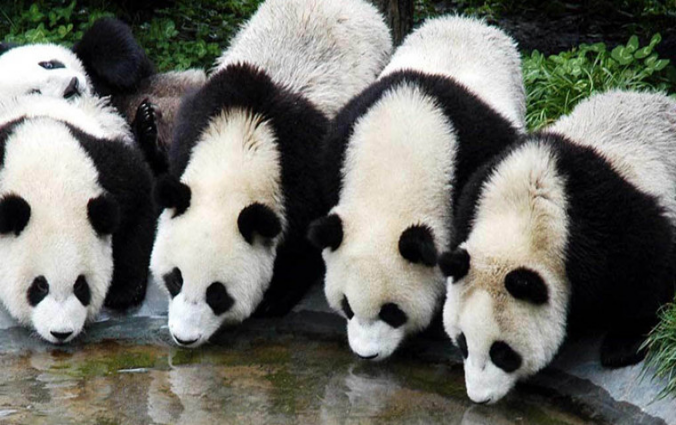
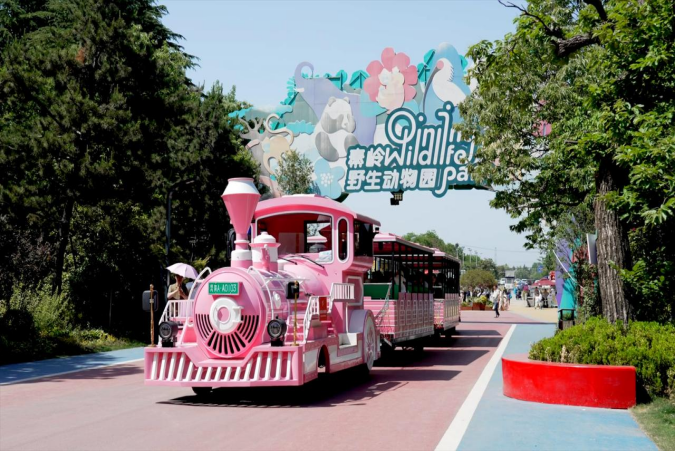
The Xi'an Qinling Wildlife Park is a comprehensive wildlife sanctuary nestled in the foothills of the majestic Qinling Mountains, dedicated to the conservation, research, and exhibition of diverse animal species from around the world. Spanning vast natural landscapes, the park provides expansive and authentic habitats for over 300 species and 10,000 animals, ranging from majestic African lions and elegant giraffes to playful ring-tailed lemurs and rare native species of the Qinling region. Visitors can embark on thrilling safari tours through open-range areas where free-roaming herbivores graze peacefully, observe powerful predators in carefully designed enclosures that mimic their wild environments, and witness the fascinating behaviors of animals from various continents. The park also features dedicated exhibition zones, including a primate house, a bird sanctuary, and an amphibian and reptile center, offering immersive educational experiences. Through guided tours, interactive feeding sessions, and informative displays, visitors can deepen their understanding of wildlife ecology, conservation challenges, and the critical importance of protecting endangered species. The Xi'an Qinling Wildlife Park serves as a vital hub for environmental education and biodiversity preservation, welcoming millions of visitors annually. It not only offers unforgettable encounters with magnificent wildlife but also inspires public commitment to animal welfare and the sustainable coexistence of humans and nature.
The Terra-cotta Warriors and Horses
In March 1974, when several farmers were sinking a well about 1.5 kilometers east of the First Qin Emperor’s Mausoleum, they came upon many fragments of terra-cotta figures. The results of archaeological excavation showed that it was an oblong pit with terracotta warriors and horses. Again in 1976, two more pits were discovered 20meters and 25 meters north of the former one respectively. They were then named Pit 1, Pit 2, and Pit 3 by the order of discovery. The three pits cover a total area of 22,780 square meters.
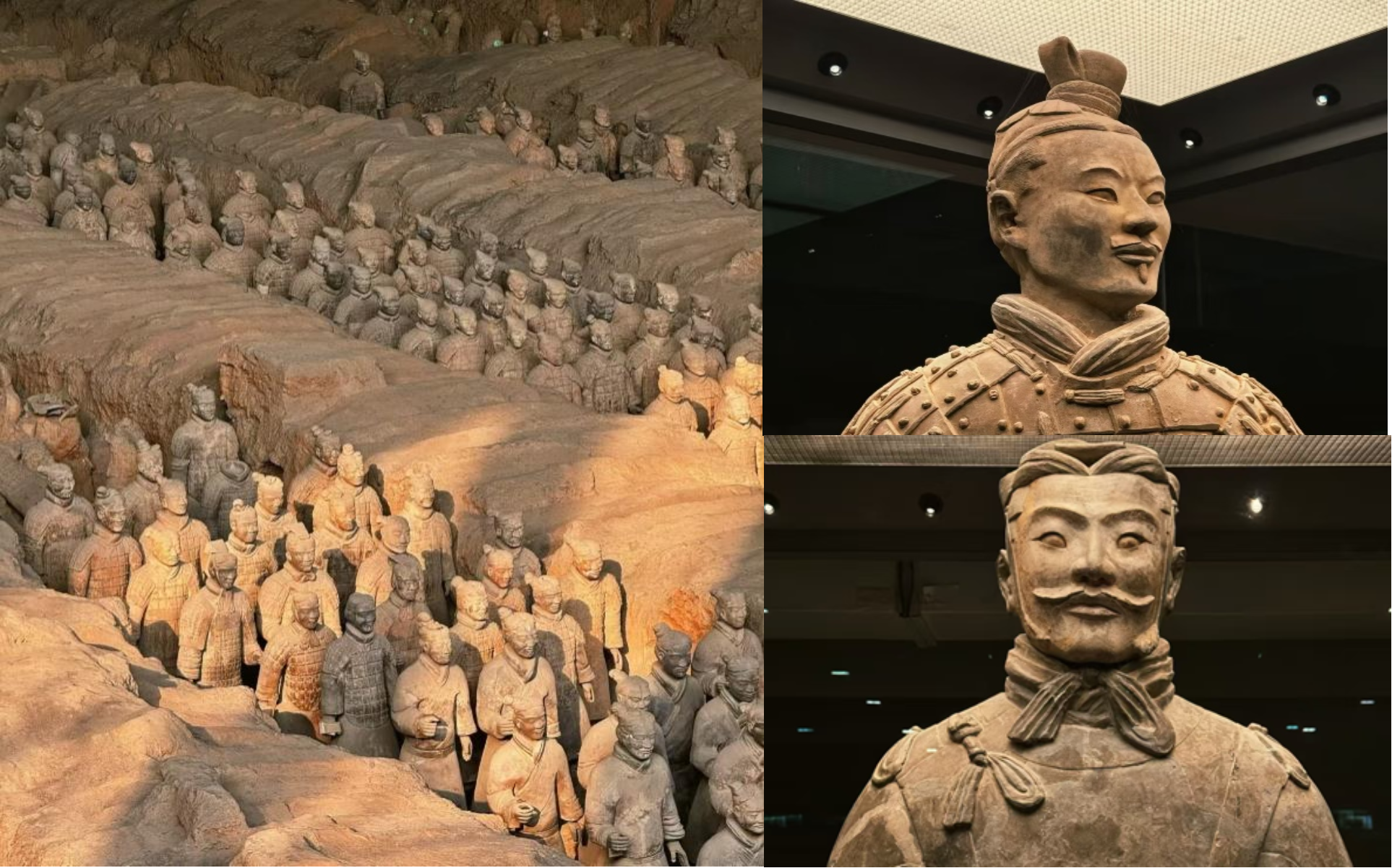
Pottery figures first appeared in the Warring States Period in China, but they were small in size and roughly made with low temperature. The Qin terracotta warriors and horses were not only big in size, but also exquisite in craftsmanship. The height of the terracotta warriors varies from 1. 78 meters (the shortest) to 1. 97 meters ( the tallest).Their weights are also different. The lightest is less than 110 kilograms and the heavies to 300 kilograms. In order to keep the balance of the terracotta warriors, the workmen in the Qin Dynasty added a pedal to each warrior under his feet, so that the warriors would stand more firmly. The foot pedals were made in molds. The feet, shoes, legs and armors of the warriors were made by hand. Some legs are hollow, and some are solid. The solid ones were made separately, but the hollow ones were made by the ring-building method. The bodies of the warriors are all hollow, made with the previously-mentioned method. Some were made separately and then joined together to complete the work.
Xi’an Ancient City Wall
Once the Ming Dynasty was unified, Zhu Yuanzhang sent orders to the local governments to build city walls. The city wall of Xi’an is an extension of the old Tang Dynasty’s royal city, as a result of this wall building campaign. A moat, wide and deep, runs around the city. Over the moat, there used to be a huge suspension bridge which cut off the way in and out of the city, once lifted. Thus, the Ming Dynasty city wall formed a complex and well-organized system of defense. It is also the most complete city wall that has survived through China’s long history. The city wall itself is a true display of the ability and wisdom of the working people in ancient times. It provides invaluable and substantial material for the study of the history, military science, and architecture of the Ming Dynasty.
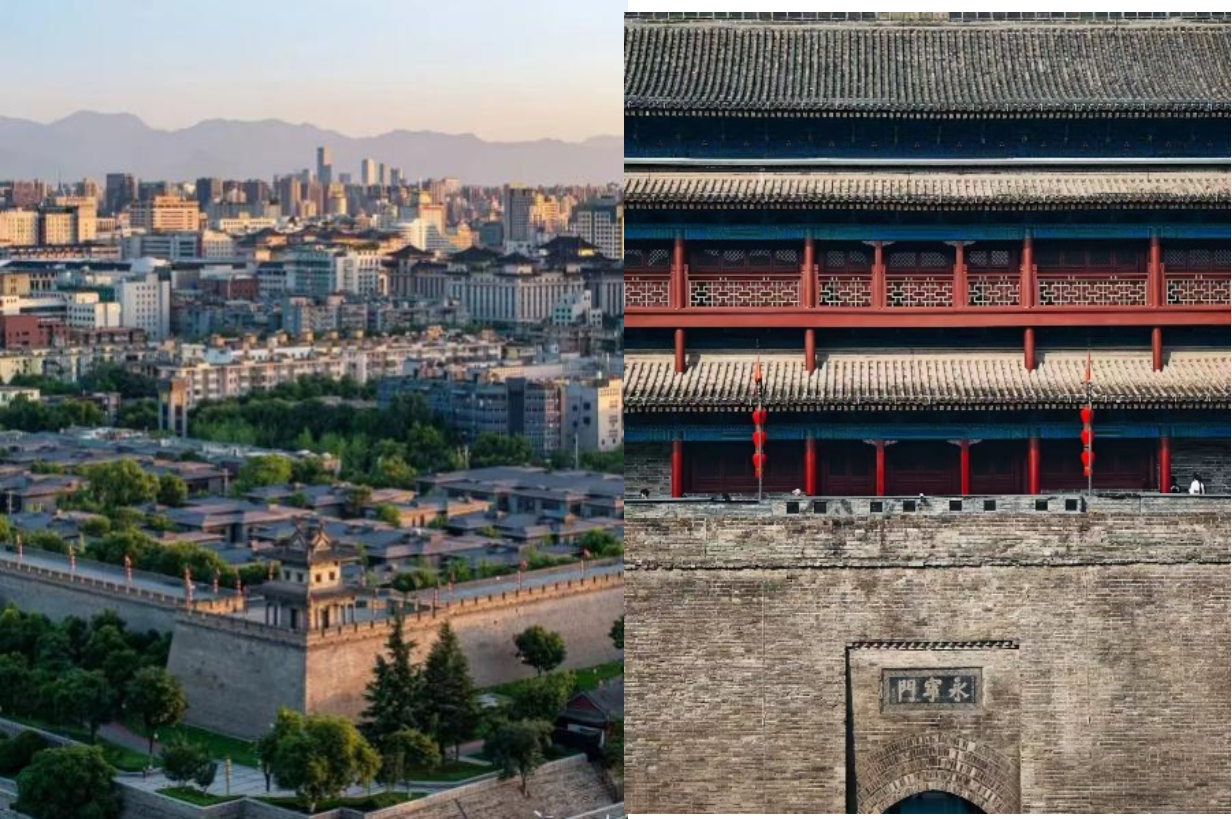
Today, after the repairs that have been made on the wall by the local government, the city wall has taken on a new look. A circular park has been built in between the high wall and the deep moat, all around the city. The thriving trees and flowers, the rockeries in the park, and the buildings of classical Chinese architecture, together with the city wall, make Xi'an all the more beautiful.
Bell Tower and Drum Tower
The Bell Tower is a classical building with carved beams and painted rafters. It stands in the center of the downtown area where the North Street, the South Street, the East Street and the West Street meet. It houses a huge bell which was originally used to strike time every morning in ancient times. Ever since its establishment, it has be-come the symbol of Xi’an. Now, it is an important historical monument in Shaanxi Province. The Bell Tower was first built in the Yingxiang Temple in 1384, which used to mark the center of the city. It was moved to its present site in 1582 as a result of the city’s expansion program.
About 500 meters northwest of the Bell Tower stands another magnificent building, the Drum Tower. It was built in 1380, four years earlier than the Bell Tower. There used to be a huge drum in the tower which told the time at dusk, hence, its name the Drum Tower. The bell in the Bell Tower and the drum in the Drum Tower have been referred to as “the Morning Bell” and “the Dusk Drum”. Later, the drum was no longer used to tell time but only to give warnings in times of war.
The base of the Drum Tower is 1,924 square meters in size, and 34 meters in height. It was also built with blue bricks. The building takes a rectangular shape and shows tiers of eaves. It has only two storeys inside. There are corridors around the tower on each tier. The outer eaves are decorated with networks of wood arches. The elegance and grandeur of its structure reveals much of the superb workmanship of the Chinese people.
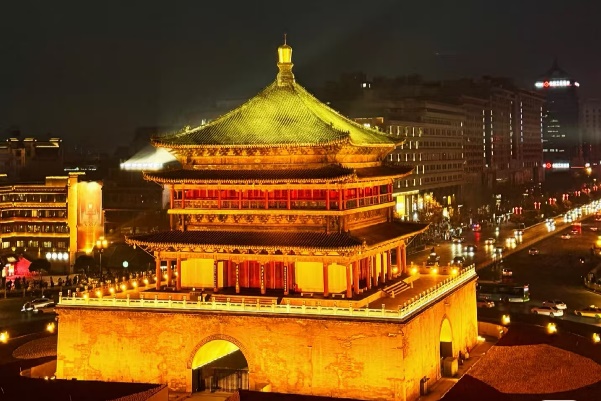

The Drum Tower is now a historical monument in Shaanxi Province. After two large-scale renovations, the tower has been restored to its former beauty. With the two towers rivaling each other, the ancient city of Xi’an is even more beautiful and spectacular than ever before.
Dayan Pagoda

Situated in the Da Ci’en Temple, about 4 kilometers from the urban center, Dayan Pagoda ( also called Da Cien Temple Pagoda) is one of the famous Buddhist pagodas in China. The five-story pagoda, 60 meters high, was brought into completion in 652 AD. Owing to the decay of its rammed earth and bricks, the pagoda increased to ten storeys when it was under reconstruction from 701 to 704. However, the winds of war in the years to come brought the pagoda almost to ruins, which in turn resulted in the construction of a seven-storey structure with a height of 64 meters.
This storied pagoda is an architectural marvel. It was built with layers of bricks but without any cement in between. The dou gong ( bracket) style in traditional Chinese architecture features the construction of the pagoda. The seams between each lay-er of bricks and the so-called “prisms” on each side are clearly visible. The pagoda is characterized by its towering height, structural compactness, imposing appearance and unaffected style. It is indeed a good reflection of people’s wisdom and talent in ancient China.
The Heavenly King and the Buddha in line drawings appear on the door frames and horizontal bars on the four sides of the pagoda’s base. They are vividly portrayed in smooth lines and show a high level of workmanship. They serve as an important source of the study of paintings and sculptures of the Tang Dynasty. Out of these artistic works, the one on the horizontal bar of the west door is the most precious. It is a rare piece of art for the study of the Tang architecture.
Xi’an Museum
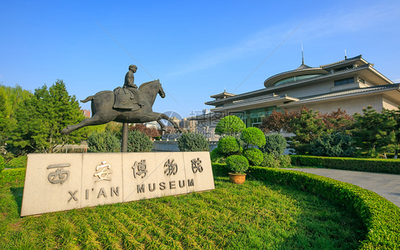
Xi’an Museum highlighting history and culture of Xi’an is located in middle section of Zhuque Street in the south of Xi’an, covering an area of 245mu (a unit of area) and composed of three parts including museum, site of Jianfu Temple in Tang Dynasty and Historical and Cultural Park of Small Wild Goose Pagoda, with museum, tower, temple and park enhancing each other’s beauty and bringing out the best in each other, being distinctive among museums in China and the rare national grade I museum integrating world cultural heritage, historical and cultural relics under state protection, ancient architectural complex and modern exhibition hall.
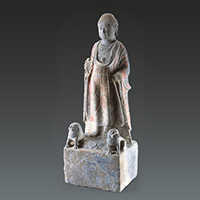
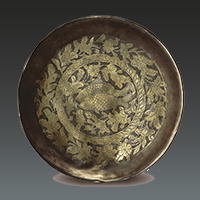
Xi’an Museum contains more than 110,000 pieces of cultural relics, including bronze wares, jade wares, gold and silver wares, porcelains, stone sculptures, inscription on tablet, seals, earthenwares, three-color glazed wares, painting and calligraphy, sutra, rubbings, ancient and rare books, miscellaneous wares, including 10441 pieces of valuable cultural relics at no lower than grade III. The museum has collected more than 100,000 volumes of ancient books, with 37 volumes of books having been selected into Catalogue of National Rare Books in China and the collections complete in sequence and category to create a system of their own. The exhibition hall of Xi’an Museum designed under the direction of Master Zhang Jinqiu as an academician of Chinese Academy of Engineering has a built-up area of more than 16000sqm and a show area of more than 5500sqm, having more than 2000 pieces of cultural relics on display, the exhibition hall has had a display pattern with focus on fundamental display of Xi’an as an ancient capital, together with special display of compassion and fascination—Chang’an Buddhist Statues Art and spirit of the universe—Selected Ancient Jade wares and various temporary exhibitions as expansion and extension thereof having shown historical features of Xi’an as a capital and cradle of Chinese civilization in various fields including politics, economy and culture etc. since Zhou Dynasty, Qin Dynasty, Han Dynasty and Tang Dynasty. Exhibition of Small Wild Goose Pagoda-Jianfu Temple History on central axis of Small Wild Goose Pagoda Scenery Spot shows value of Small Wild Goose Pagoda in heritage as well as historical fact and experience in exchange and innovation between orient and west in terms of culture along Silk Road in those days.


Da Tang Everbright City
Grand Tang Sleepless Plaza is located in the Newly - developed Qujiang Zone of Xi’an. Focusing on the prosperous culture of the Tang Dynasty, based on the Dayan Pagoda, featured with the Tang ethos and characterized by experiential consumption.
The Grand Tang Sleepless Plaza is divided into six Tang-style blocks, the largest landscape avenue in Asia, three theme cultural squares, four cultural and artistic galleries, and eight culture-tourism-trade projects. 5 billion yuan is invested in it with the pur-pose of one-stop consumer paradise such as shopping, catering, entertainment, leisure, tourism and business affairs.


As a show card of Xi’an, Grand Tang Sleepless Plaza runs through the north to the south, covering Xuan Zang Square, Zhen Guan Square and Kai Yuan Celebration Square, of which Zhen Guan Square is the kernel part. More than one billion yuan is invested in four cultural and artistic complexes, including Xi’an Grand Theatre, Xi’an Concert Hall, Qujiang Art Gallery and Qujiang Movie Theatre. Domestic and overseas tourists can experience different cultures and appreciate competitive artistic works of different countries and regions. So Xi'an is becoming the hub and origin of West China’s culture and art.
Chateau Changyu Rena
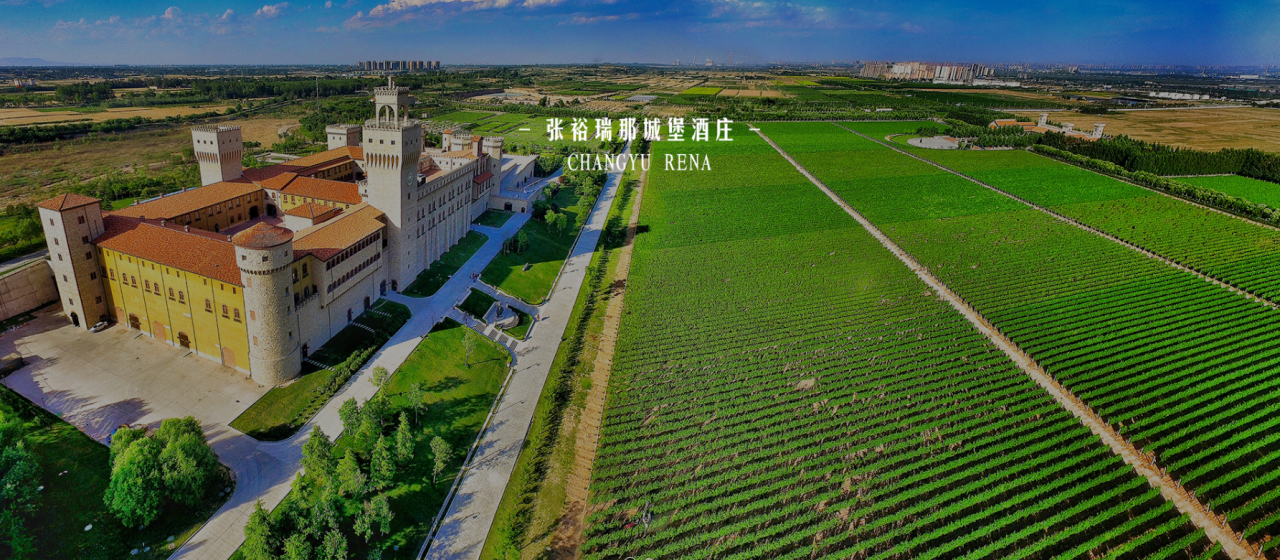
Chateau Changyu Rena is an exquisite winery situated in the historic city of Xianyang, Shaanxi Province, dedicated to the art of fine winemaking and the celebration of both Chinese and European viticultural traditions. This magnificent chateau showcases stunning Italian Renaissance architecture, featuring grand towers, elegant courtyards, and sweeping stone staircases that transport visitors to the romantic vineyards of Tuscany while rooted in the rich cultural soil of ancient China. The estate encompasses lush vineyards where premium grape varieties, including Cabernet Sauvignon, Merlot, and Syrah, flourish in the region's continental climate with ample sunshine and distinctive seasonal changes. Visitors can wander through the scenic vine rows, descend into the impressive underground cellar where wines age to perfection in imported French oak barrels, and savor guided tastings of the chateau's acclaimed vintages in opulent tasting salons. The chateau also offers comprehensive wine tourism experiences, including a wine history museum, professional sommelier courses, hands-on winemaking workshops, and authentic Italian cuisine paired with estate wines. Through immersive educational programs, harvest festivals, and cultural exhibitions, guests develop a profound appreciation for the craftsmanship of winemaking and the convergence of Eastern and Western wine cultures. Chateau Changyu Rena serves as a prestigious landmark for wine tourism and cultural exchange, drawing countless visitors annually. It not only delivers an enchanting exploration of wine excellence but also fosters public recognition of the sophistication, heritage, and global vision that characterize China's evolving wine industry.
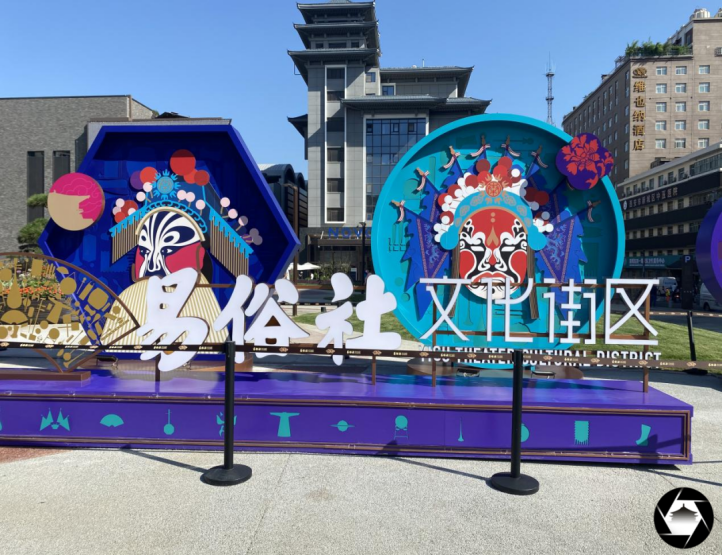
Yisu Theatre Cultural District
Located at the northeast corner of the Xi'an Bell Tower, Yisu Theatre Cultural District is centered on Yisu Theatre, consisting of various cultural display areas such as the Bell Tower Bookstore, Bell Tower Post Office, food court, time-honored restaurants and the open-air theatre. The district is an important window to demonstrate the art of Qinqiang and showcase the charm of the city.
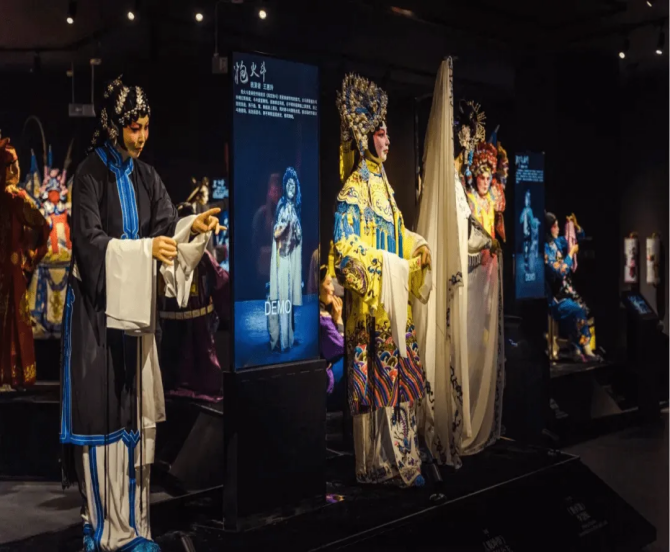
Yisu Theatre, a theater community with a long history, was founded in 1912, and is over 100 years old. It is the first art community in China that integrates the performance, training and production of opera, playing an important role in the development of Qinqiang. Also, Yisu Theatre is known as one of the three oldest theater communities in the art world globally, along with the Bolshoi Theater and the Royal Opera House.
Built around Yisu Theatre, the district is featured by the Qinqiang culture, with buildings such as the theater, museum and outdoor stage, which smoothly combines the unique charm of the ancient Qinqiang with the vibe of a modern cultural neighborhood.
Visitors can take a tour of the Yisu Theatre Museum, read the manuscripts of the original scripts in the collection, and learn about the rich history of the theater; they can also watch the classic plays in the Yisu Theatre and feel the distinctive charm of Qinqiang.
There is a retro pedestrian street built underneath the Yisu Theatre Cultural District, where visitors can instantly travel back to the 1980s in Xi'an. The trams, schools, cinemas, video stores, photo studios, barber stores and kiosks of that era have all been recreated in their original form.
Campus Photos